
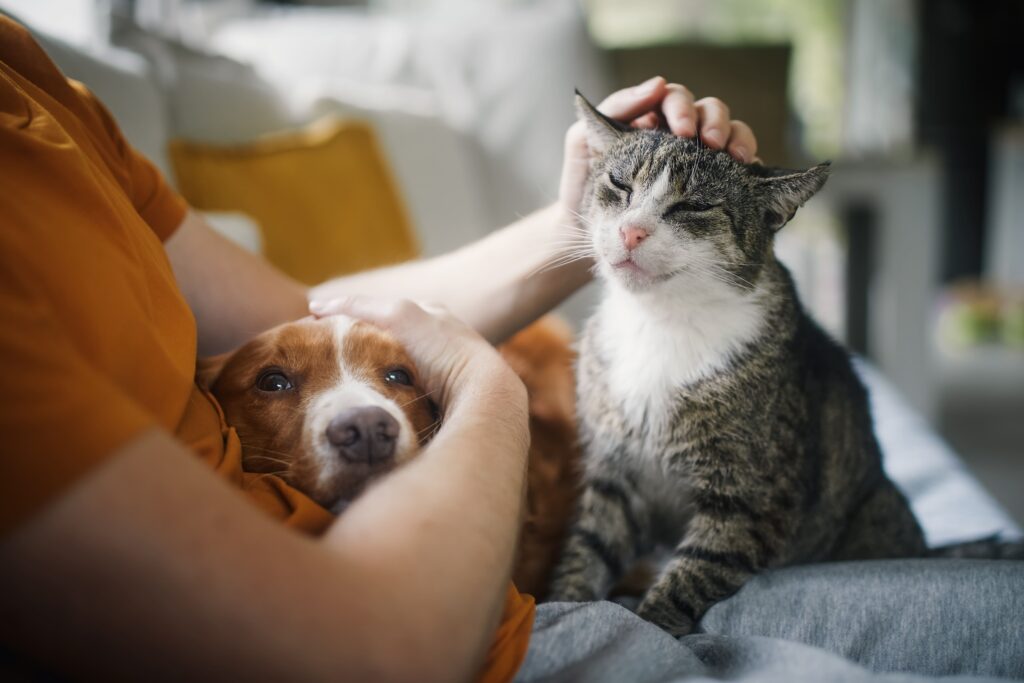

Our pets can experience a wide range of emotions, and while they continue to play an increasingly integral role in our lives, anxiety has become one of the more prevalent behavioral issues owners are concerned about in Alpharetta, GA. This article from Dr. Christine Cumberbatch at easyvet Alpharetta covers what anxiety looks like and whether your pet may actually have a different behavioral issue.
What Does Anxiety in Pets Look Like?
Anxiety in dogs and cats can manifest in a number of different ways, including self-mutilation, vocalization, aggression, and potty accidents, just to name a few. A number of these pets will sometimes improve with simple modifications to their routine or environment, and others may require prescription medications to help manage and alleviate symptoms.
But Does Your Pet Really Have Anxiety?
With society’s increasing awareness of the importance of mental health and the negative impacts daily stressors can have on the quality of our lives, it makes complete sense that we’ve also become more focused on our pets’ mental well-being, but does your pet have anxiety or is it merely a behavioral problem?
Unfortunately, over time we’ve seen pets with many behavioral issues be mistakenly categorized as anxiety, and, in certain instances, be placed on medications that don’t address the root cause of the problem.
Is It Anxiety or a Behavioral Issue?
As humans, we’re limited in the ways we can communicate with our pets and tend to interpret their behaviors through the lens of our own lives, experiences, and human interactions. As such, most unwanted pet behaviors are immediately considered anxiety because we’re unable to adequately interpret the behavior being displayed.
A pet barking in his crate, having litterbox accidents, being reactive to strangers, or even aggressive at the vet’s office may not be anxiety at all, and may actually be learned behavior patterns that can be easily remedied with a structured approach to modifying the pet’s behavior, without the need for medication.
Developing a Strategy to Manage Your Pet’s Behavior
Determining if your pet truly has anxiety should be the first step in developing a strategy to manage or eliminate the unwanted behavior. This usually starts with a behavior consultation to not only characterize the pet’s behavior, but also to take into consideration the environment and daily interactions the pet has with other animals and people in the home, which are of remarkable significance in the development of unwanted behaviors.
Behavior Consultations at easyvet Alpharetta
Here at easyvet Alpharetta, we try to determine the root cause of the unwanted behavior and advise clients to discontinue any related medications for their pets, especially sedatives, prior to their initial consultation. Please do not discontinue any medications ahead of time without explicit instructions from a veterinarian. Seeing your pet in their natural state allows us to have a more accurate assessment of the pet’s true personality without the effects of medications. We usually refrain from booking any other appointments during behavior consultations to limit external stressors, and our clinic’s open floor plan lends itself to a lower-stress environment for everyone involved.
Have Your Pet Evaluated for Anxiety in Alpharetta, GA
If you believe that your pet may have anxiety or a behavioral issue, contact us at easyvet Alpharetta. We will get your pet scheduled for a one-hour behavioral consultation with Dr. Christian Cumberbatch. Our clinic treats cats and dogs from Alpharetta, Milton, Big Creek, and surrounding areas.